Most people come to Pula for the Arena. They see it, they photograph it, they tick the box. And the Arena is genuinely impressive. One of the largest Roman amphitheatres in the world, still standing after two thousand years. No argument there.
But Pula has layers that the standard itinerary never reaches. A city that has been Roman, Byzantine, Venetian, Austro-Hungarian, Italian, Yugoslav, and Croatian in succession tends to leave traces that do not make it onto the highlight reel. Here are the ones worth finding.
1. La Yugo Vita – Pula from the back seat of a 1979 Zastava 101
Start here. La Yugo Vita is a private two-hour ride through the Yugoslav-era history of Pula in a restored 1979 Stojadin. You will pass the Uljanik shipyard and hear how one of Yugoslavia’s biggest employers actually worked: the workers’ unions, the social system, the whole structure behind it. You will drive through Veruda and understand why those residential blocks exist and who they were built for. You will pass closed military zones, stop at Karlo Rojc, a former Yugoslav army centre that is now home to artists and NGOs, and cruise along the Lungo Mare as the light changes over the bay.
The engine sounds like something between a sewing machine and a tractor. People on the street stop and wave. Occasionally someone shares a memory of the same car from their childhood. It is the most Pula thing you can do, and it is nothing like any other tour in the city.
Book La Yugo Vita here.
2. The Punishment of Dirce – a Roman mosaic hidden beside a car park
This one requires no planning and no entry fee. Hidden beside a car park just off the main pedestrian street is a third century Roman floor mosaic, twelve by six metres, uncovered after World War II bombing and left exactly where it was found. Most visitors walk past the turning without noticing it exists. The mosaic is free to see, almost always quiet, and genuinely extraordinary. Search for “Mozaik Kažnjavanje Dirke” on Google Maps before you go and follow the pin.
3. Zerostrasse – the tunnels under the city
Built during World War I, the Zerostrasse is a network of underground corridors running about ten metres below street level, stretching across nearly a kilometre beneath the city centre. The tunnels were used as shelter during bombing raids and later repurposed during the Yugoslav era. Today they are open to visitors with exhibitions and light installations that give the space more atmosphere than a typical museum. Entry is cheap and the experience is genuinely strange in the best way.
4. Vodnjan mummies – fifteen minutes from Pula
The town of Vodnjan, a short drive from Pula, has a church that houses the mummified remains of several saints alongside a collection of religious relics. The Church of St. Blaise looks ordinary from the outside. Inside it is something else entirely. Whether or not you have any interest in religious history, the strangeness of the place tends to stay with people. Worth combining with a stop at a local olive oil producer in the same town.
5. The old Market Hall – where Pula actually shops
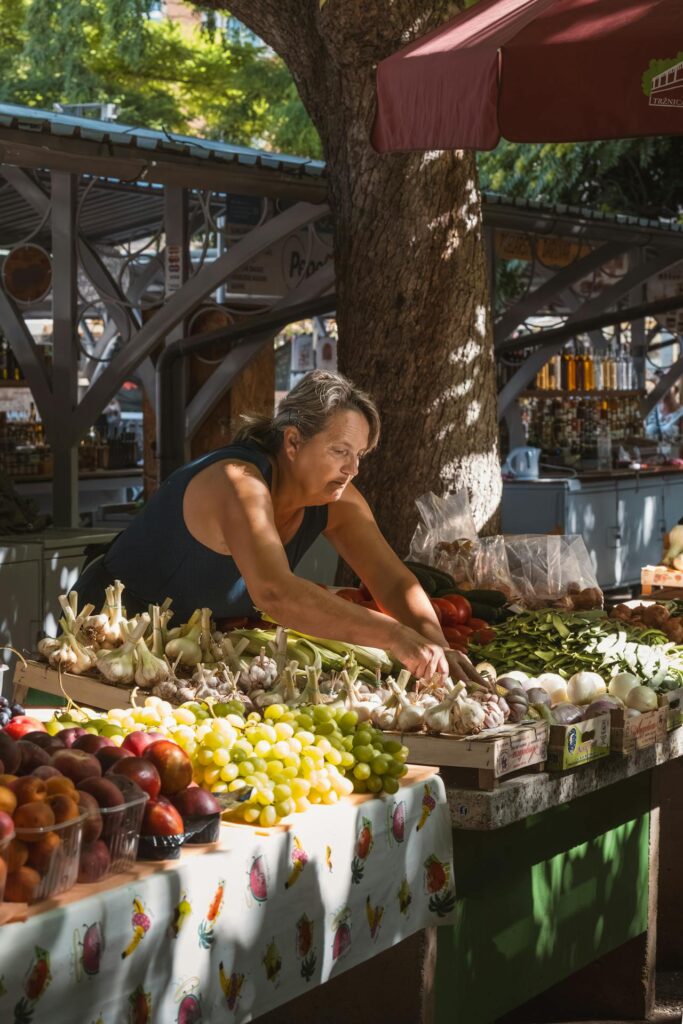
The covered market near the old town has been running for over a hundred years, built during the Austro-Hungarian period and unchanged in the ways that matter. Fish on the lower level, fruit and vegetables, local cheese, honey, and olive oil from producers who have been coming here for decades. It opens early and winds down by midday. Go before nine in the morning if you want the full version. No entry fee, no tour required, and a more accurate picture of Pula than anything on the official attractions list.
6. Karlo Rojc – the Yugoslav army building that refused to become a ruin
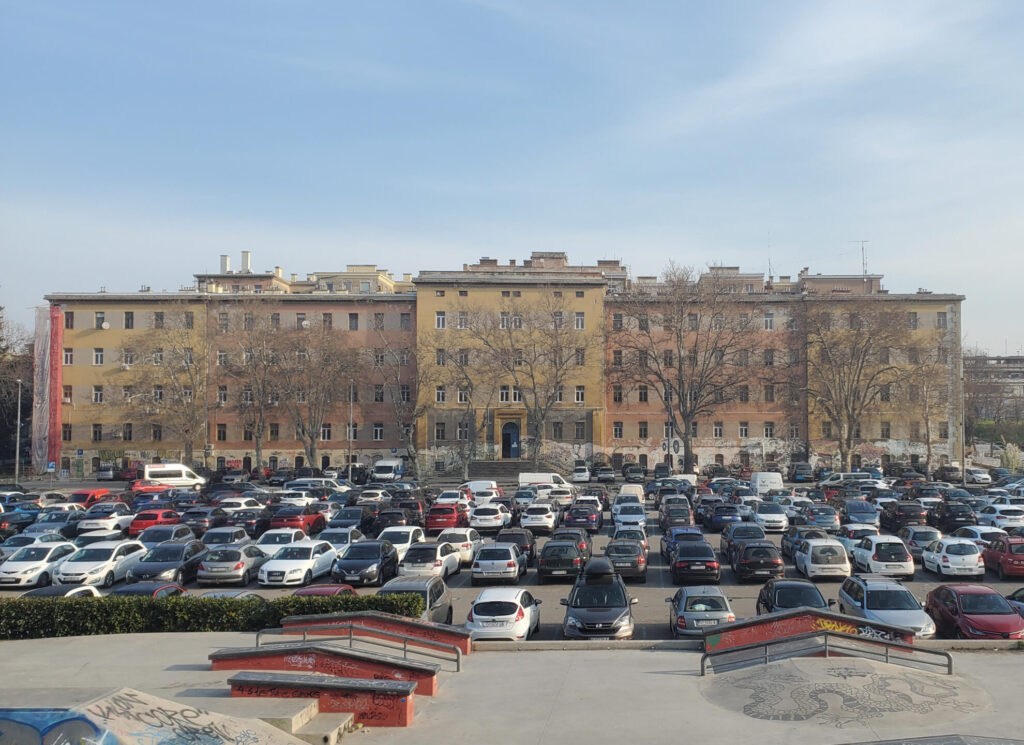
If you do La Yugo Vita you will stop here. But it is worth knowing about separately. Karlo Rojc is a vast socialist era building that was originally a Yugoslav army centre and is now home to around eighty organisations: climbing walls, NGOs, theatre groups, musicians, activists, a skate park. It operates on a model of social solidarity that is itself a piece of living Yugoslav history. Nothing about it looks like a tourist attraction, which is exactly why it is one of the most interesting buildings in the city.
A note on timing
Pula in July and August is a different city from Pula in May, June, September, or October. The unusual version of Pula is much easier to find when the Arena crowds are not there. If you have any flexibility on dates, the shoulder season is when the city belongs to itself again.
Planning your evening too? Here is a guide to things to do in Pula at night.