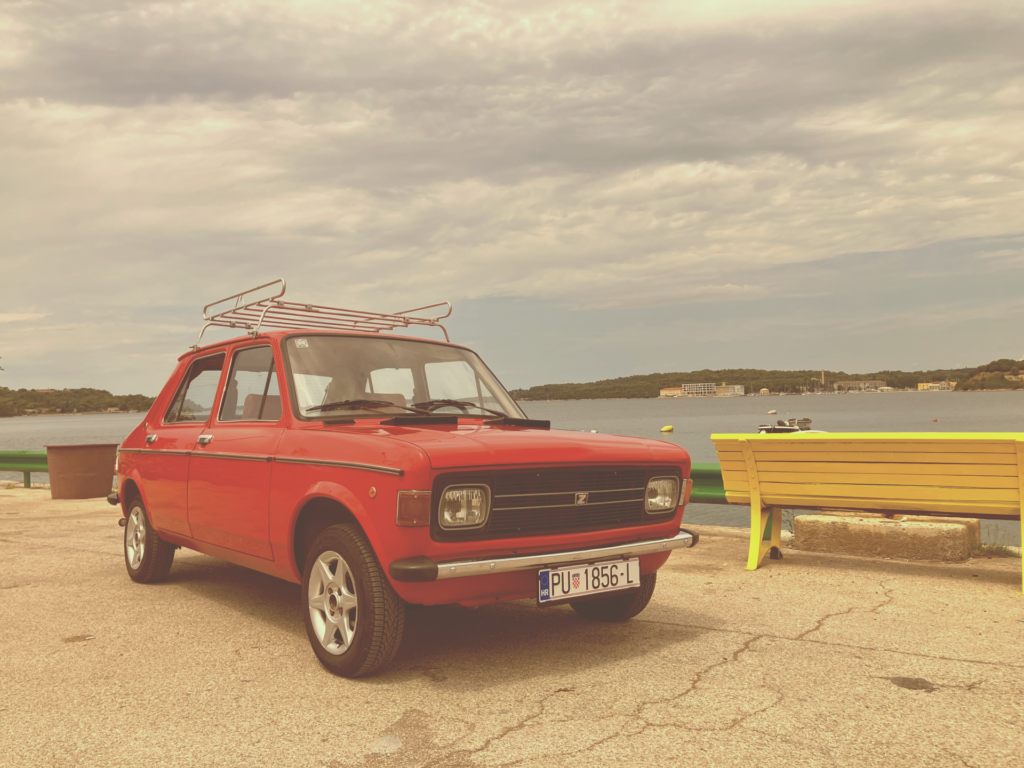
La Yugo Vita
Private Retro Tour Pula
A two hour experience, beyond the classic tour.
Pula has two versions. The first is the one everyone sees: the Arena, the Forum, the old town. The second is quieter, more layered, and almost impossible to find on your own. La Yugo Vita takes you into the second version.
You ride in a restored 1979 Zastava 101, the Stojadin, with a local guide who knows the city from the inside. Two hours, with no script. Pomalo…as we say in Pula.
What you will see
La Yugo Vita is not a sightseeing tour with a list of stops. Instead,it is a conversation about a city, told from the streets where the story actually happened. The route is not fixed, because it moves with the day, the light, and the people in the car. Still, there are places we always pass through, and each one has a reason to be there.
The shipyard that employed a generation
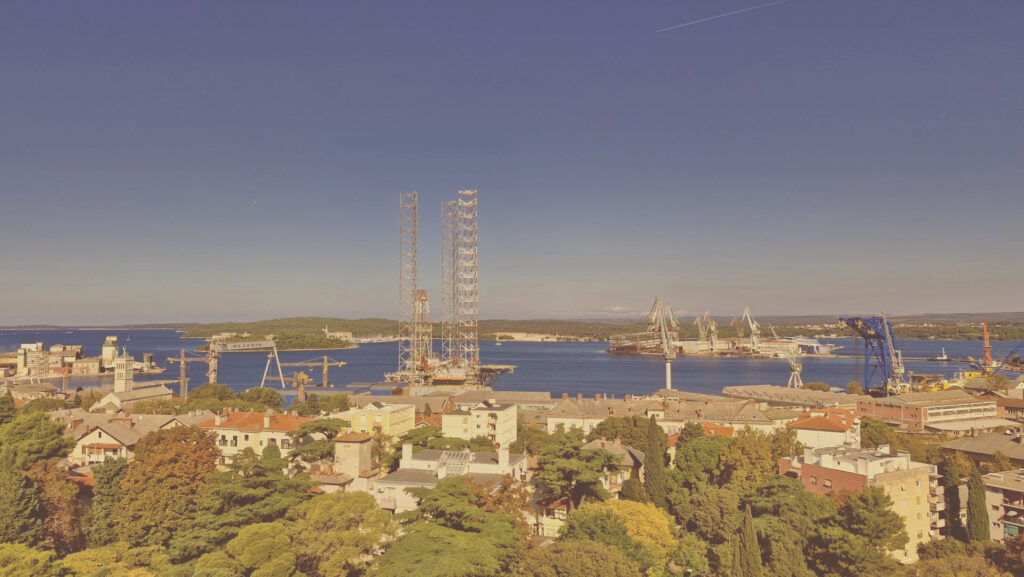
Uljanik has been part of Pula’s skyline since the Austro-Hungarian empire, but the Yugoslav chapter is the one worth understanding. At its peak, Uljanik was one of the biggest employers in all of Yugoslavia. What that actually meant for the people who worked there, how they were paid, how they lived, what rights they had, what the state expected in return, is a story that most visitors to Pula never hear.
You cannot go inside. You stand at the fence and look at those cranes, and someone explains what was on the other side of them. That tends to be enough.
The neighbourhood that came with the job
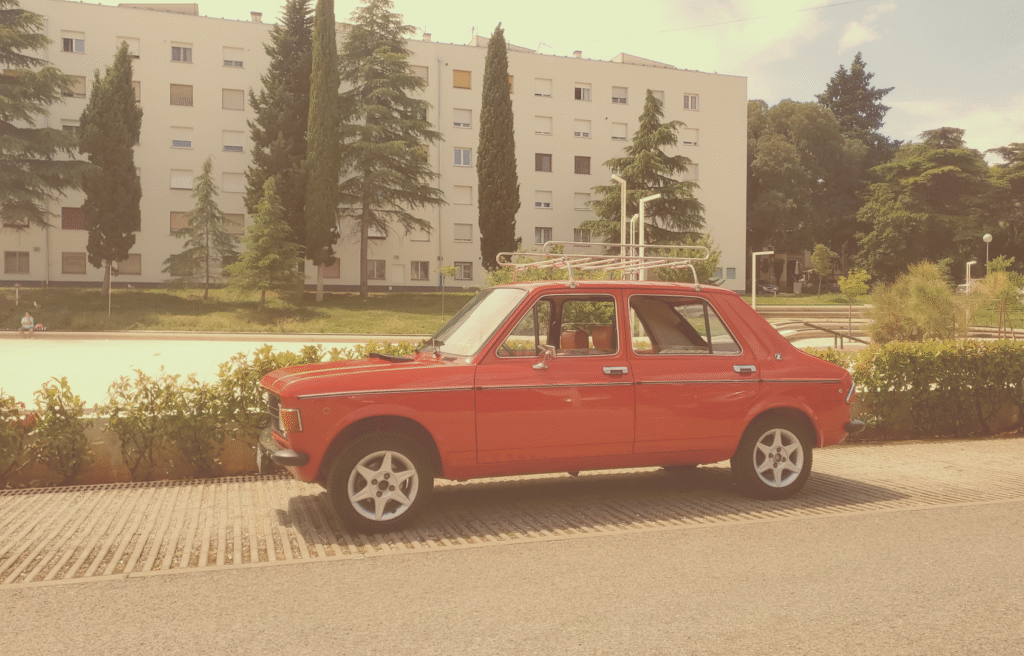
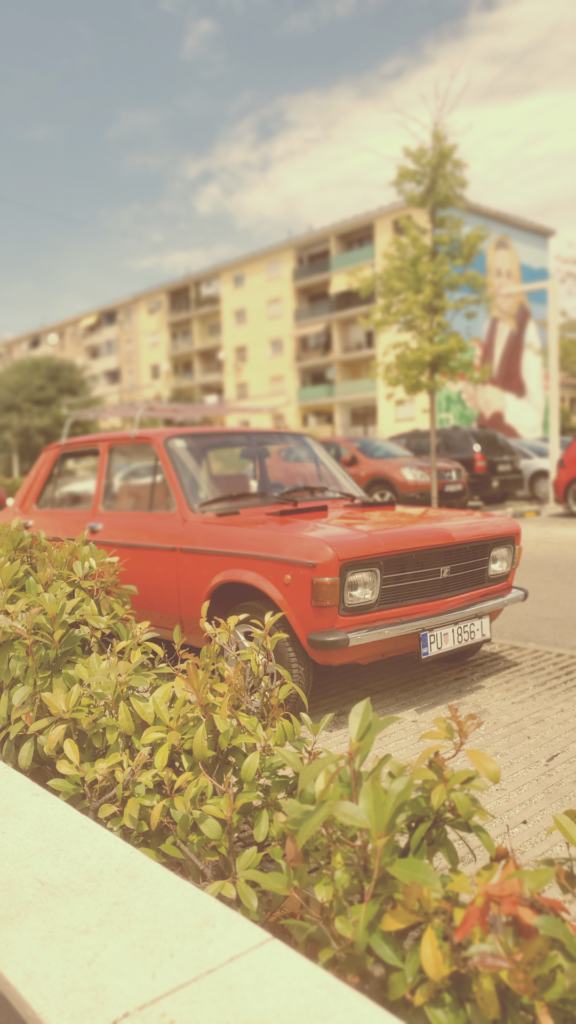
From Uljanik the story moves to Veruda, and it follows logically. The apartments there did not appear by accident. They were built for the shipyard workers as part of a system where employment and housing were connected in a way that is hard to imagine now. Beyond that, the architecture is not trying to be beautiful. It is trying to be sufficient, and fair, and permanent. Once you understand the thinking behind it, you start to see it differently. Rather than something left over, it becomes something that was deliberate. Something that had a logic to it, even if that logic belonged to a world that no longer exists.
The gate that never opened
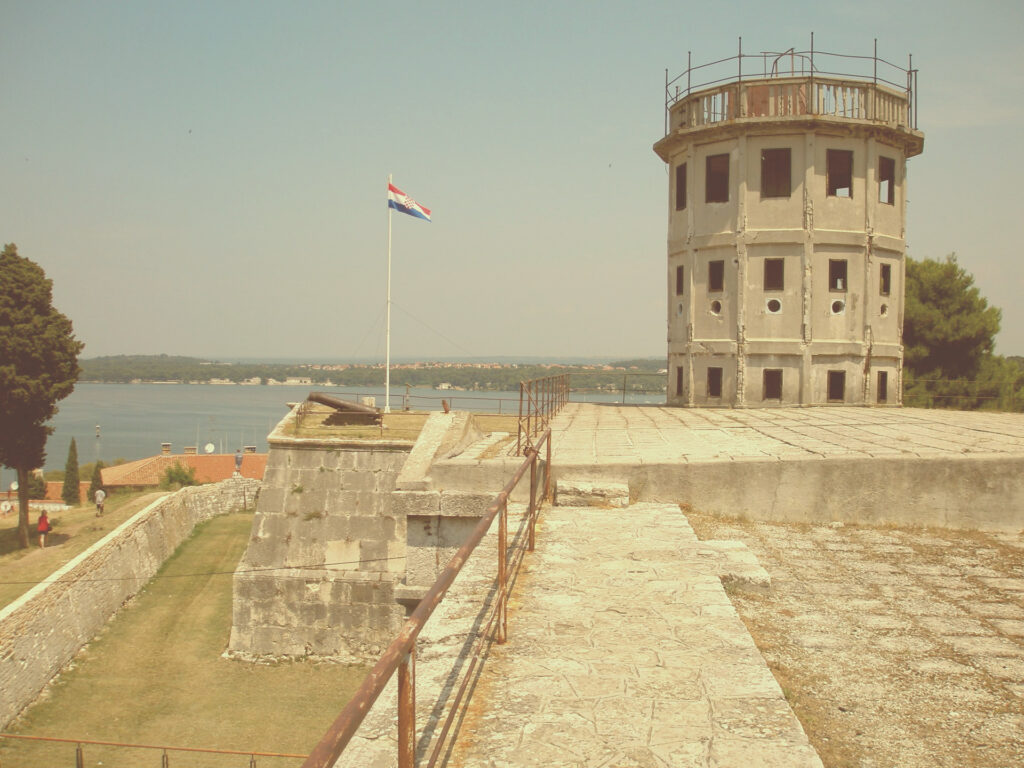
The road arrives at Muzil. There is a gate, and a guard, and not much else visible from the outside. That is intentional, and not just because of the military. The Muzil peninsula was a restricted zone for the entire duration of socialist Yugoslavia. The people of Pula could see it from the shore their whole lives and never once step foot in it.
Across the water from here, you can see the Brijuni islands. Knowing what Muzil was and knowing what Brijuni was at the same time, and standing between the two of them as the sun drops, gives you a very specific feeling about how Yugoslavia actually worked. We stop here for a while. Pomalo…
The sea belonged to everyone
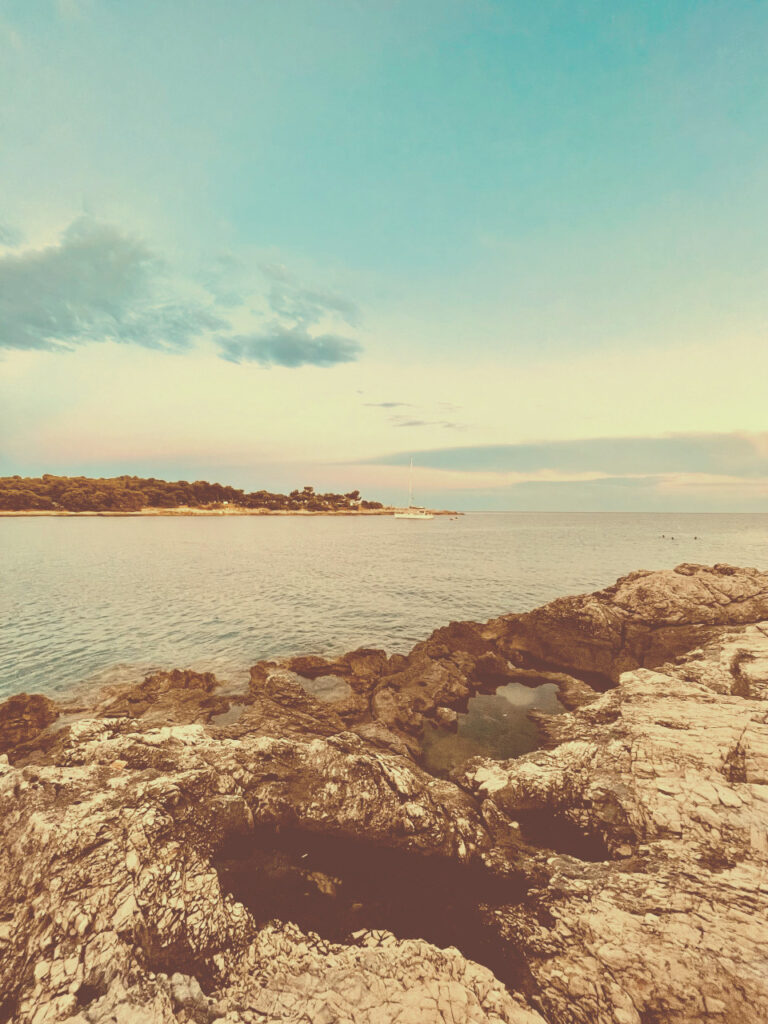
The route continues to Stoja, where an autocamp and a city beach seat side by side for decades. The camp was not a tourist resort. It was simply where you went in the summer, because that was what you did. Every working family in Yugoslavia had a right to two weeks by the sea, and the state or the unions took care of that. Factories across the whole country had arrangements with camps like this one. People packed their Zastavas and drove to the coast as a family ritual that repeated every year without question. Next to the camp, the city beach was where Pula itself came. Not visitors, not people on package holidays, but the people who actually lived here. Workers, families, neighbours. The sea was not a luxury. It was part of the deal. It belonged to everyone.
The army left. The people stayed.
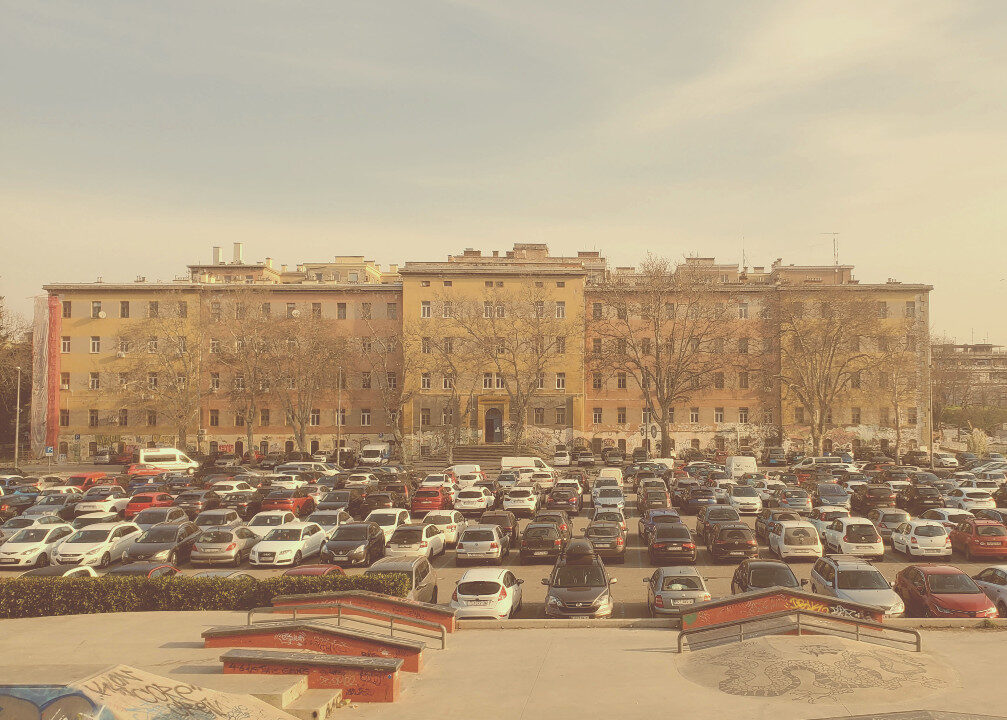
The route usually ends at Karlo Rojc. It was a Yugoslav army centre and it is now home to around eighty organisations: artists, community groups, NGOs, theatre companies, activists. The building is the same building. What happens inside it is completely different. That gap between what a place was designed for and what people eventually made of it is something you will have been thinking about since Uljanik. In fact, every stop along the way adds another layer to it. By the time you reach Rojc, the thought has somewhere to land. That is where it completes itself.

How it works
La Yugo Vita runs for two hours. We pick you up at your accommodation or wherever works best, just outside the pedestrian zone. The experience is private. The car seats up to three people and the tour does not run with strangers. At some point during the ride, if you want it, you can take the wheel yourself. A valid driving licence is required for self-drive.
The tour runs in good weather only. In case of rain we reschedule at no charge.
Book now and pay on the day. We confirm within a few hours of receiving your request.
✅ What’s included
🎤 English-speaking driver and storyteller.
🗺️ 2-hour private retro experience.
🚗 Pick-up and drop-off from your place of stay.
⛽ Gasoline.
🛡️ Passenger insurance.
🏁 Optional self-drive experience.
🥤 A drink and snacks.
🎁 A small retro souvenir.
❌ What’s excluded
🎟️ Entry tickets to attractions (if any).
🚗 Pick-up
Pick-up by Zastava 101 (Stojadin) at pre-agreed locations in the city of Pula, outside the pedestrian zone. Drop-off as agreed.
ℹ️ Additional Info
- Private experience for you and your group.
- Accommodates 1 to 3 people. Minimum charge €120 (covers up to 2 guests).
- Suitable for ages 12 and up.
- Best enjoyed after 7pm or at sunrise.
- Good weather required. We’ll reschedule if rain is forecast at no charge.
From 60,00 € per person
📅 Reserve now & pay later to book your spot.
Frequently asked questions
The Zastava 101 was produced in Kragujevac, Serbia between 1971 and 2008. Over 1.2 million were built, making it one of the most common cars in Yugoslav history. The nickname Stojadin comes from the number 101 (sto jedan). The car was so widespread it became a person. Ours was built in 1979 and has been fully restored.
La Yugo Vita is a private experience for 1 to 3 people. The minimum booking covers 2 guests. The car is small by design that is part of what makes it feel like a real ride rather than a group tour.
Yes. At some point during the ride you can take the wheel. A valid driving licence is required. Let us know when you book and we will make sure you get your turn.
We pick you up at your accommodation or wherever works best, just outside the pedestrian zone in Pula. Agree the exact spot when you book and Stojadin will be there.
La Yugo Vita runs in good weather only. If rain is forecast we will reschedule to a date that works for both of us at no charge.
Nothing at all. The tour is designed for curious people, not history experts. Everything is explained along the way. The history is the context, not the subject.
Fill in the booking form and we will confirm within a few hours. You reserve now and pay on the day of the tour.
That is a secret. You will find out at the end of the ride.
Two hours, one Stojadin, and a version of Pula most visitors never find.
📅 Reserve now & pay later to book your spot.